Below are several motorcycle itineraries for discovering the beauty of Salento along some of its most scenic roads.
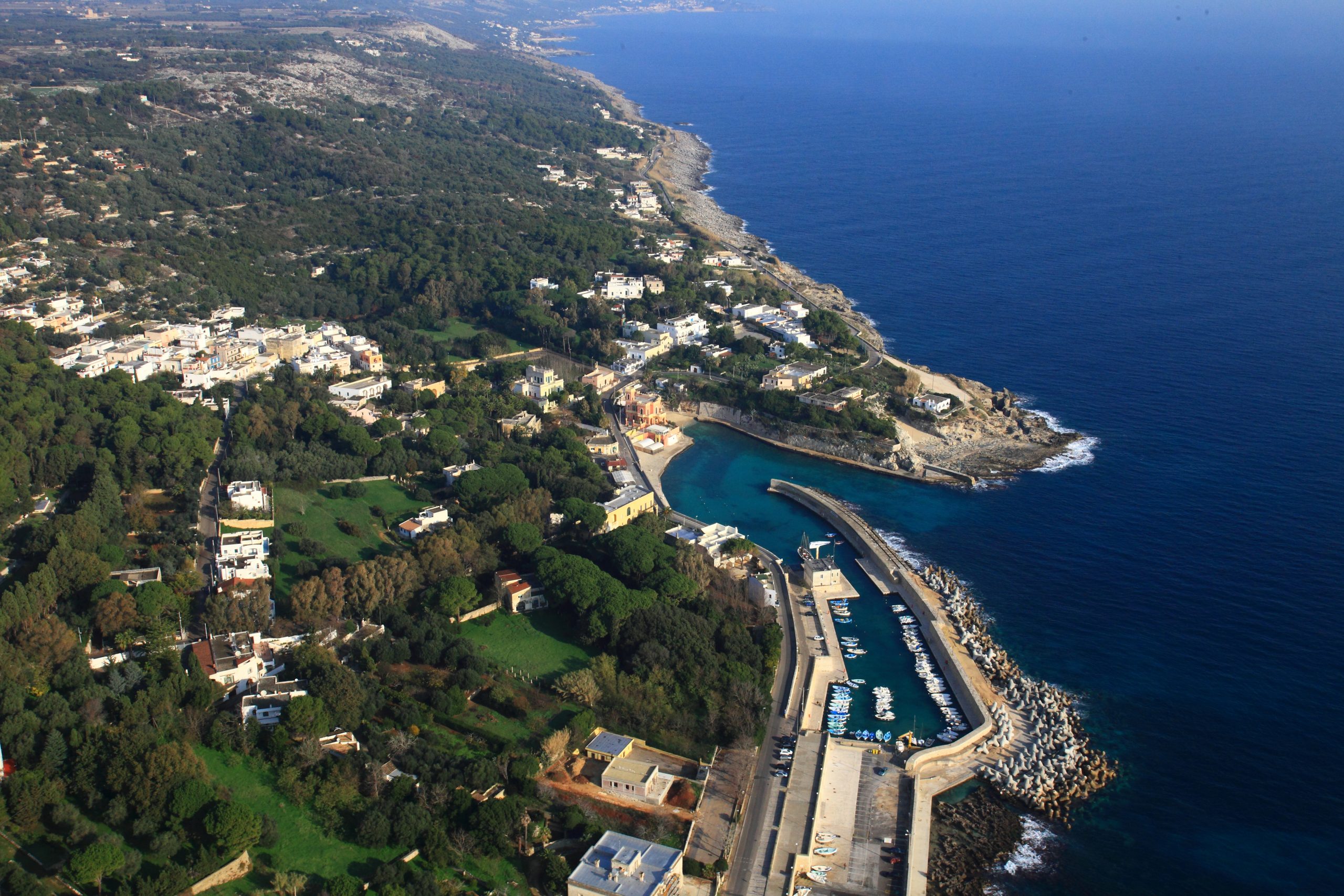
FROM SANTA MARIA DI LEUCA TO OTRANTO: Discover Puglia by motorcycle on an itinerary along Salento’s most beautiful and captivating coastline, travelling from Santa Maria di Leuca to Otranto on spectacular winding roads overlooking the sea. The SP81 is one of the most scenic motorcycle routes in Salento and Puglia, as well as one of the most beautiful roads in Italy. It runs close to the sea and passes through magnificent destinations such as Castro, Santa Cesarea Terme and Porto Badisco.
Salento is now famous throughout the world for the beauty of its beaches, its cultural and culinary traditions, its historic towns, music, events and year-round climate, which makes it ideal for exploring by motorcycle. Our route takes us approximately 50 unforgettable kilometres from Santa Maria di Leuca, the southernmost point of Italy’s “heel”, to Otranto.
Santa Maria di Leuca: The journey begins in Santa Maria di Leuca, a small yet beautiful seaside and fishing town situated in the inlet between Punta Ristola and Punta Meliso. It is set like a precious stone within a stretch of coastline alternating between cliffs and small sandy coves. Its numerous caves are of considerable historical and natural interest, while the seabed is a paradise for diving enthusiasts. The most beautiful locations can only be reached by sea, but there are also many places accessible on foot where you can enjoy a swim in the clear blue water.
Numerous magnificent 19th-century villas in Moorish, Art Nouveau and Pompeian styles overlook the sea. A staircase of 184 steps connects the Sanctuary of Santa Maria di Leuca, perched above the coastline and offering magnificent views, with the harbour below. The staircase frames the monumental endpoint of the Apulian Aqueduct, where the waterway reaches the sea.
Tricase: The historic centre is distinguished by the imposing Castle of the Gallone Princes, with its 14th-century tower and keep, now home to the Town Hall. Just a few steps away begins an elegant network of religious buildings, including the Baroque Church of San Domenico, the majestic Mother Church commissioned by the Gallone Princes, the Church of the Nativity with the underground Crypt of Our Lady of Pompeii, and the Renaissance Church of San Michele Arcangelo. The latter is the pride of Piazza Pisanelli and is regarded as one of the “seven pearls” of Salento architecture.
Tricase also has a charming seaside district, Tricase Porto, an ancient fishing village with a small beach and harbour overlooked by Villa Torre, where time appears to have stood still. Traditional seafood recipes are still prepared here, while patron saints are celebrated with evocative processions at sea.
The Tricase coastline begins at Tricase Porto and continues towards Marina Serra, extending for eight kilometres along wild, rocky shores set within a large natural bay. Here you will also find the Grotta dei Monaci, carved into the sandstone, and Grotta Matrona, which can only be reached by swimming.
Castro: Continuing northwards, with the coastline visible from your side of the road, you will reach Castro, a fascinating medieval village. It can be divided into two distinct areas: Castro Marina, home to the harbour and small rock-cut caves once used as storage spaces by fishermen; and Castro Superiore, an ancient hilltop village with panoramic views across the sea.
The 16th-century fortifications, still visible along extensive sections, were built to defend the town against frequent pirate raids. In the upper part of Castro stands the castle, built during the second half of the 16th century on the remains of an older fortress. You will also find the Cathedral, originally dating from the 12th century and subsequently altered over time, where Romanesque and Byzantine elements remain visible.
Santa Cesarea Terme: Continue towards Santa Cesarea Terme, a small town of approximately three thousand inhabitants built on a dramatic cliff overlooking the Strait of Otranto. Santa Cesarea Terme is renowned for its sulphurous, saline and iodine-rich thermal waters, which flow from four natural caves at a temperature of approximately 30°C.
The town features numerous villas built by the local nobility during the late 19th century, as well as elegant terraced buildings designed to welcome visitors. Its surrounding countryside includes gently rolling green hills covered with olive groves and vineyards. The roads wind between elegant residences that give the town the atmosphere of another era.
Porto Badisco: Before reaching Otranto, a stop in Porto Badisco is essential. This true jewel of Salento is known for its famous cove, where the air carries the scent of the wind, sea salt, Mediterranean scrub and aromatic plants.
The waters of Porto Badisco are rich in sea urchins, which can be enjoyed at the kiosk beside the village’s small bar. Opposite it is an exceptional viewpoint overlooking the rocks. According to legend, Aeneas landed here in a small boat with his father Anchises and his son Ascanius.
This enchanting seaside destination in Puglia is therefore known as the “Landing Place of Aeneas”. It is also home to the famous Grotta dei Cervi, known as the Sistine Chapel of Prehistory. This underground complex was inhabited by some of Salento’s earliest communities four thousand years ago.
The cave extends for three kilometres and contains thousands of engravings and paintings whose vivid colours remain astonishing today. Unfortunately, it has been closed to the public for safety reasons since 1970.
Otranto: The journey ends in Otranto, also known as the “Gateway to the East”. It overlooks the southern Adriatic and the Strait of Otranto, the stretch of water between Puglia and the Balkans that takes its name from the town.
Otranto is renowned for its Cathedral, completed and opened for worship in 1088. Its façade was rebuilt following the Ottoman invasion, while its incomparable 12th-century floor mosaic has now been fully restored. The Cathedral also houses the remains of the 800 martyrs killed during the Ottoman invasion.
In addition to the Cathedral, Otranto offers magnificent views of the Aragonese Castle, together with its towers, bastions and defensive walls. The historic centre features narrow streets paved with local stone, winding between houses that now accommodate numerous distinctive shops, restaurants and artisan food businesses.
During the summer, the town is particularly lively both during the day and in the evening, thanks partly to two small beaches situated within the town centre. A few kilometres away, you can relax on the wide, open beaches near the Alimini Lakes, an unspoilt natural area within a regional park that includes exceptional locations such as Baia dei Turchi.
FROM OTRANTO TO GALLIPOLI: The starting point is Otranto, a town renowned for its beautiful sea and its long, fascinating history. The former Byzantine capital of Salento is surrounded by legends, the most famous of which concerns “Bella Idrusa”.
Corso Garibaldi is the ideal destination for shopping. At the Oggettistica shop on the corner with Via Cavour, you can also find traditional terracotta spice jars. For a romantic walk, follow the Bastione Pelasgi, which overlooks the illuminated rock in the centre of the harbour.
Back on the motorcycle, follow the coastal road to Porto Badisco, a tiny inlet considered a paradise for swimmers. On entering Santa Cesarea Terme, the Moorish character of Villa Sticchi creates a captivating atmosphere.
Continue towards the beautiful town of Castro, known as the Pearl of Salento, to visit the Zinzulusa Cave. Discovered by a bishop in 1793, the cave extends for 140 metres and contains a natural nativity scene formed by stalagmites.
Return to the road and continue towards Leuca, the “heel of Italy”. Before reaching the southernmost point of Puglia, pass through Gagliano del Capo. Those seeking secluded and less crowded beaches should visit the Ciolo inlet.
In Leuca, visitors are welcomed by an imposing lighthouse and numerous eclectic buildings with Eastern influences, particularly along Via Tommaso Fuortes. The ice cream parlours along the seafront provide the perfect place for an afternoon break.
After rounding the cape, continue northwards towards Gallipoli. The Adriatic gives way to the Ionian Sea, which here forms the Gulf of Taranto. Fishermen gather at the harbour in Torre Vado, while near Ugento, motorcycle enthusiasts of all ages can complete a few laps at the Pista Salentina circuit.
Gallipoli is another 25 kilometres away, along a jagged, rocky coastline that is vaguely reminiscent of northern European fjords. Built on an island connected to the mainland by a 17th-century bridge, Gallipoli combines the charm of a historic town with the energy of modern life.
To discover the old town, follow Riviera Nazario Sauro around the perimeter of the ancient walls, passing churches and historic palaces. The modern town, meanwhile, offers several shopping streets. Its glass skyscraper in Piazza Aldo Moro overlooks the Greek Fountain and the Angevin Castle.
GRECÌA SALENTINA:
Main advantages offered by Callistos Hotel & Spa to motorcycle travellers:
- Complimentary room upgrade, subject to availability
- Secure motorcycle parking
- Generous breakfast
- 10% discount at 119 Restaurant & Wine Bar
- 10% discount on SPA treatments and massages
- Complimentary access to the Fitness Room
- Complimentary bottle of water in your room
- Special rates and discounts for groups, associations and motorcycle clubs
LINKS:
– www.motoexcape.com/leuca-otranto-moto-salento-puglia/
– https://www.mototurismodoc.com/itinerari-moto/itinerari-moto-scheda.php?recordid=15
– https://www.dueruote.it/itinerari/i-nostri-viaggi/italia/puglia/
– https://www.motociclismo.it/viaggio-in-moto-in-puglia-e-salento-68779
– https://www.percorsidoc.it/alla-scoperta-del-salento-in-moto%EF%BB%BF/
– https://www.hellodir.com/176/giro-del-salento-in-moto-ecco-dove-andare/
– https://www.edenpuglia.com/il-salento-in-moto.html